![D-Link DES-3828P — понимание приоритета трафика и VLAN в сетевых устройствах [72/260]](/icons/site-icon-64.png)
D-Link DES-3828P — понимание приоритета трафика и VLAN в сетевых устройствах [72/260]
Превью страниц
Страница 72 /
260
![D-Link DES-3828DC [72/260] Notes about vlans on the des 3550](/views2/1043702/page72/bg48.png)
DES-3550 Fast Ethernet Layer 2 Switch
VLANs
Understanding IEEE 802.1p Priority
Priority tagging is a function defined by the IEEE 802.1p standard designed to provide a means of managing traffic on a
network where many different types of data may be transmitted simultaneously. It is intended to alleviate problems
associated with the delivery of time critical data over congested networks. The quality of applications that are dependent on
such time critical data, such as video conferencing, can be severely and adversely affected by even very small delays in
transmission.
Network devices that are in compliance with the IEEE 802.1p standard have the ability to recognize the priority level of data
packets. These devices can also assign a priority label or tag to packets. Compliant devices can also strip priority tags from
packets. This priority tag determines the packet's degree of expeditiousness and determines the queue to which it will be
assigned.
Priority tags are given values from 0 to 7 with 0 being assigned to the lowest priority data and 7 assigned to the highest. The
highest priority tag 7 is generally only used for data associated with video or audio applications, which are sensitive to even
slight delays, or for data from specified end users whose data transmissions warrant special consideration.
The Switch allows you to further tailor how priority tagged data packets are handled on your network. Using queues to
manage priority tagged data allows you to specify its relative priority to suit the needs of your network. There may be
circumstances where it would be advantageous to group two or more differently tagged packets into the same queue.
Generally, however, it is recommended that the highest priority queue, Queue 1, be reserved for data packets with a priority
value of 7. Packets that have not been given any priority value are placed in Queue 0 and thus given the lowest priority for
delivery.
A weighted round robin system is employed on the Switch to determine the rate at which the queues are emptied of packets.
The ratio used for clearing the queues is 4:1. This means that the highest priority queue, Queue 1, will clear 4 packets for
every 1 packet cleared from Queue 0.
Remember, the priority queue settings on the Switch are for all ports, and all devices connected to the Switch will be
affected. This priority queuing system will be especially beneficial if your network employs switches with the capability of
assigning priority tags.
VLAN Description
A Virtual Local Area Network (VLAN) is a network topology configured according to a logical scheme rather than the
physical layout. VLANs can be used to combine any collection of LAN segments into an autonomous user group that appears
as a single LAN. VLANs also logically segment the network into different broadcast domains so that packets are forwarded
only between ports within the VLAN. Typically, a VLAN corresponds to a particular subnet, although not necessarily.
VLANs can enhance performance by conserving bandwidth, and improve security by limiting traffic to specific domains.
A VLAN is a collection of end nodes grouped by logic instead of physical location. End nodes that frequently communicate
with each other are assigned to the same VLAN, regardless of where they are physically on the network. Logically, a VLAN
can be equated to a broadcast domain, because broadcast packets are forwarded to only members of the VLAN on which the
broadcast was initiated.
Notes About VLANs on the DES-3550
No matter what basis is used to uniquely identify end nodes and assign these nodes VLAN membership, packets cannot cross
VLANs without a network device performing a routing function between the VLANs.
The DES-3550 supports IEEE 802.1Q VLANs and Port-Based VLANs. The port untagging function can be used to remove
the 802.1Q tag from packet headers to maintain compatibility with devices that are tag-unaware.
The Switch's default is to assign all ports to a single 802.1Q VLAN named "default."
The "default" VLAN has a VID = 1.
The member ports of Port-based VLANs may overlap, if desired.
58
Содержание
371- D link des 3550
- Manual
- Managed layer 2 ethernet switch
- Release 3
- Table of contents
- Preface
- Notes notices and cautions
- Typographical conventions
- Intended readers
- Safety instructions
- Safety cautions
- General precautions for rack mountable products
- Protecting against electrostatic discharge
- Section 1
- Introduction
- Gigabit ethernet technology
- Fast ethernet
- Switch description
- Switching technology
- Features
- Front panel components
- Led indicators
- Side panel description
- Rear panel description
- Gigabit combo ports
- Section 2
- Package contents
- Installation
- Before you connect to the network
- Installing the switch without the rack
- Installing the switch in a rack
- Power on
- Power failure
- Mounting the switch in a standard 19 rack
- Connecting the switch
- Switch to end node
- Section 3
- Switch to hub or switch
- Connecting to network backbone or server
- Management options
- Introduction to switch management
- Command line console interface through the serial port
- Web based management interface
- Snmp based management
- Section 4
- Connecting the console port rs 232 dce
- First time connecting to the switch
- Password protection
- Snmp settings
- Ip address assignment
- Connecting devices to the switch
- Web based switch configuration
- Section 5
- Login to web manager
- Introduction
- Web based user interface
- Areas of the user interface
- Web pages
- Section 6
- Configuring the switch
- Switch information
- Ip address
- Advanced settings
- Setting the switch s ip address using the console interface
- Port configurations
- Port description
- Port mirroring
- Understanding port trunk groups
- Link aggregation
- Lacp port setting
- Mac notification port settings
- Mac notification global settings
- Mac notification
- Igmp snooping
- Static router ports
- Spanning tree
- S mstp
- W rapid spanning tree
- Port transition states
- P2p port
- Edge port
- Stp bridge global settings
- D 802 w 802 s compatibility
- Mst configuration table
- Msti settings
- Stp instance settings
- Mstp port information
- Static multicast forwarding
- Forwarding filtering
- Unicast forwarding
- Multicast port filtering
- Vlan description
- Understanding ieee 802 p priority
- Notes about vlans on the des 3550
- Ieee 802 q vlans
- Q vlan tags
- Tagging and untagging
- Port vlan id
- Ingress filtering
- Default vlans
- Vlan segmentation
- Vlan and trunk groups
- Static vlan entry
- Port based vlans
- Gvrp setting
- Traffic control
- Port security
- Advantages of qos
- Understanding qos
- Port bandwidth
- Scheduling
- P user priority
- P default priority
- Traffic segmentation
- System severity alerts
- System log server
- Sntp settings
- Current time settings
- Time zone and dst
- Configuring the access profile table
- Access profile table
- X port based and mac based access control
- Pae access entity 802 x
- Authentication server
- Authenticator
- Port based network access control
- Client
- Authentication process
- Radius server
- Once the connected client has successfully been authenticated the port then becomes authorized and all subsequent traffic on the port is not subject to access control restriction until an event occurs that causes the port to become unauthorized hence if the port is actually connected to a shared media lan segment with more than one attached device successfully authenticating one of the attached devices effectively provides access to the lan for all devices on the shared segment clearly the security offered in this situation is open to attack
- Network access uncontrolled port
- Network access controlled port
- Figure 6 71 example of typical port based configuration
- Ethernet switch
- Des 3550 fast ethernet layer 2 switch
- Mac based network access control
- Ethernet switch
- Radius server
- Network access uncontrolled port
- Network access controlled port
- Configure authenticator
- Port capability
- Pae system control
- Initializing ports for port based 802 x
- Initializing ports for mac based 802 x
- Reauthenticate port s for port based 802 x
- Radius server
- Static arp table
- Layer 3 ip networking
- Ip mac binding per port
- Ip mac binding
- Ip mac binding table
- Ip mac binding blocked
- Limited ip multicast range settings
- Dhcp bootp relay
- Dhcp bootp relay global settings
- Dhcp bootp relay interface settings
- User accounts
- Security ip
- Section 7
- Management
- Admin and user privileges
- Access authentication control
- Policy parameters
- Application s authentication settings
- Authentication server group settings
- Authentication server hosts
- Login method lists
- Enable method lists
- Local enable password
- Enable admin
- Secure socket layer ssl
- Download certificate
- Ciphersuite
- Ssh configuration
- Secure shell ssh
- Ssh algorithm
- Ssh user authentication
- Snmp settings
- Snmp manager
- Snmp user table
- Snmp view table
- Snmp group table
- Snmp community table configuration
- Snmp host table
- Snmp engine id
- Section 8
- Monitoring
- Port utilization
- Cpu utilization
- Received rx
- Packets
- Umb cast rx
- Transmitted tx
- Received rx
- Errors
- Transmitted tx
- Mac address
- Switch history
- Igmp snooping group
- Igmp snooping forwarding
- Vlan status
- Router port
- Port access control
- Authenticator state
- Layer 3 feature
- Browse arp table
- Download firmware from tftp server
- Tftp services
- Section 9
- Maintenance
- Download configuration file
- Upload log
- Upload configuration
- Ping test
- Save changes
- Reset system
- Logout
- Reset config
- Reboot device
- Single ip management sim overview
- Section 10
- D link single ip management
- Sim using the web interface
- Topology
- Tool tips
- Right click
- Group icon
- Commander switch icon
- Member switch icon
- Candidate switch icon
- Menu bar
- Device
- Firmware upgrade
- Configuration file backup restore
- Technical specifications
- Physical and environmental
- Appendix a
- General
- Performance
- Cables and connectors
- Appendix b
- Cable lengths
- Appendix c
- Glossary
- Warranty product registration
- Limited warranty
- Fcc warning
- Product registration
- General terms
- D link europe limited product warranty
- Technical support
- Tech support for customers within new zealand
- Tech support for customers within australia
- Technical support
- Tech support for customers within south eastern asia and korea
- Monday to friday 9 30am to 7 00pm
- Http www dlink co in dlink drivers support asp
- Http ww dlink co in
- Ftp support dlink co in
- Email techsupport dlink co in
- D link technical support over the telephone
- D link technical support over the internet
- 91 22 26526741
- 91 22 26526696 ext 161 to 167
- You can find software updates and user documentation on the d link website
- Technical support
- Tech support for customers within india
- Technical support
- Tech support for customers within the russia
- Thursday 9 00am to 1 00pm gmt 4
- Technical support
- Tech support for customers within turkey
- Tech support for customers within the u a e north africa
- Tech support for customers within israel
- Tech support for customers within egypt
- Sunday to wednesday 9 00am to 6 00pm gmt 4
- Http support dlink me com
- Email support dlink me com
- D link middle east north africa
- 971 4 391 6480 u a e
- Technical support
- Tech support for customers within south africa and sub sahara region
- Technical support
- Tech support for latin america customers
- Tech support for customers within brazil
- Техническая поддержка
- Soporte técnico help desk guatemala
- Soporte técnico help desk el salvador
- Soporte técnico help desk ecuador
- Soporte técnico help desk colombia
- Soporte técnico help desk chile
- Soporte t é cnico help desk argentina
- Soporte dlinkla com
- El servicio de soporte técnico tiene presencia en numerosos países de la región latino américa y presta asistencia gratuita a todos los clientes de d link en forma telefónica e internet a través de la casilla
- D link latin américa pone a disposición de sus clientes especificaciones documentación y software mas reciente a través de nuestro sitio web
- Asistencia técnica
- Www dlinklatinamerica com
- Soporte técnico help desk venezuela
- Soporte técnico help desk perú
- Soporte técnico help desk panamá
- Telefone
- Suporte técnico
- Suporte t é cnico para clientes no brasil
- E mail
- 友冠技術支援
- Technical support
- Tech support for customers within the united states
- Tech support for customers within canada
- The united kingdom ireland
- Technical support
- For customers within canada
- For customers within
- Österreichs der schweiz und osteuropas sind
- Wenn sie kunde von d link außerhalb deutschlands
- Wenden sie sich bitte an die zuständige
- Technische unterstützung
- Niederlassung aus der liste im benutzerhandbuch
- 12 min aus dem festnetz der deutschen telekom
- Support technique destiné aux clients établis en france
- Support technique destiné aux clients établis au canada
- Assistance technique
- Http www dlink es email soporte dlink es
- Asistencia técnica
- Supporto tecnico
- Gli ultimi aggiornamenti e la documentazione sono
- Email tech dlink it
- Disponibili sul sito d link
- D link mediterraneo s r l
- Via n bonnet 6 b 20154 milano supporto tecnico dal lunedì al venerdì dalle ore 9 0 alle ore 19 0 con orario continuato telefono 02 39607160
- Url http www dlink it supporto html
- Supporto tecnico per i clienti residenti in italia
- Technical support
- Tech support for customers within the netherlands
- Tech support for customers within belgium
- Tech support for customers within
- Luxemburg
- Telefoniczna pomoc techniczna firmy d link
- Pomoc techniczna firmy d link świadczona przez internet
- Pomoc techniczna
- Technická podpora
- Technikai támogatás
- D link magyarország
- D link teknisk support over internett
- 10 610
- Teknisk support
- Produktets garantitid
- Kunder kan kontakte d links teknisk support via våre
- Hverdager 08 00 20 00
- Http www dlink no
- Hjemmesider eller på tlf
- Du kan finne programvare oppdateringer og bruker
- Dokumentasjon på d links web sider
- D link tilbyr sine kunder gratis teknisk support under
- D link teknisk telefon support
- Teknisk support
- D link teknisk support på internettet
- D link tillhandahåller teknisk support till kunder i sverige under hela garantitiden för denna produkt
- D link teknisk support via telefon
- D link teknisk support via internet
- 33 00 35
- Vardagar 08 0 20 0
- Teknisk support för kunder i sverige
- Teknisk support
- På vår hemsida kan du hitta mer information om mjukvaru uppdateringar och annan användarinformation
- Http www dlink se
- Email support dlink se
- 技术支持
- International offices
- Registration card
- All countries and regions excluding usa
Похожие устройства
-
 D-Link DES-3200Сжатое руководство пользователя
 -
 D-Link DES-1100-16Технические характеристики
 -
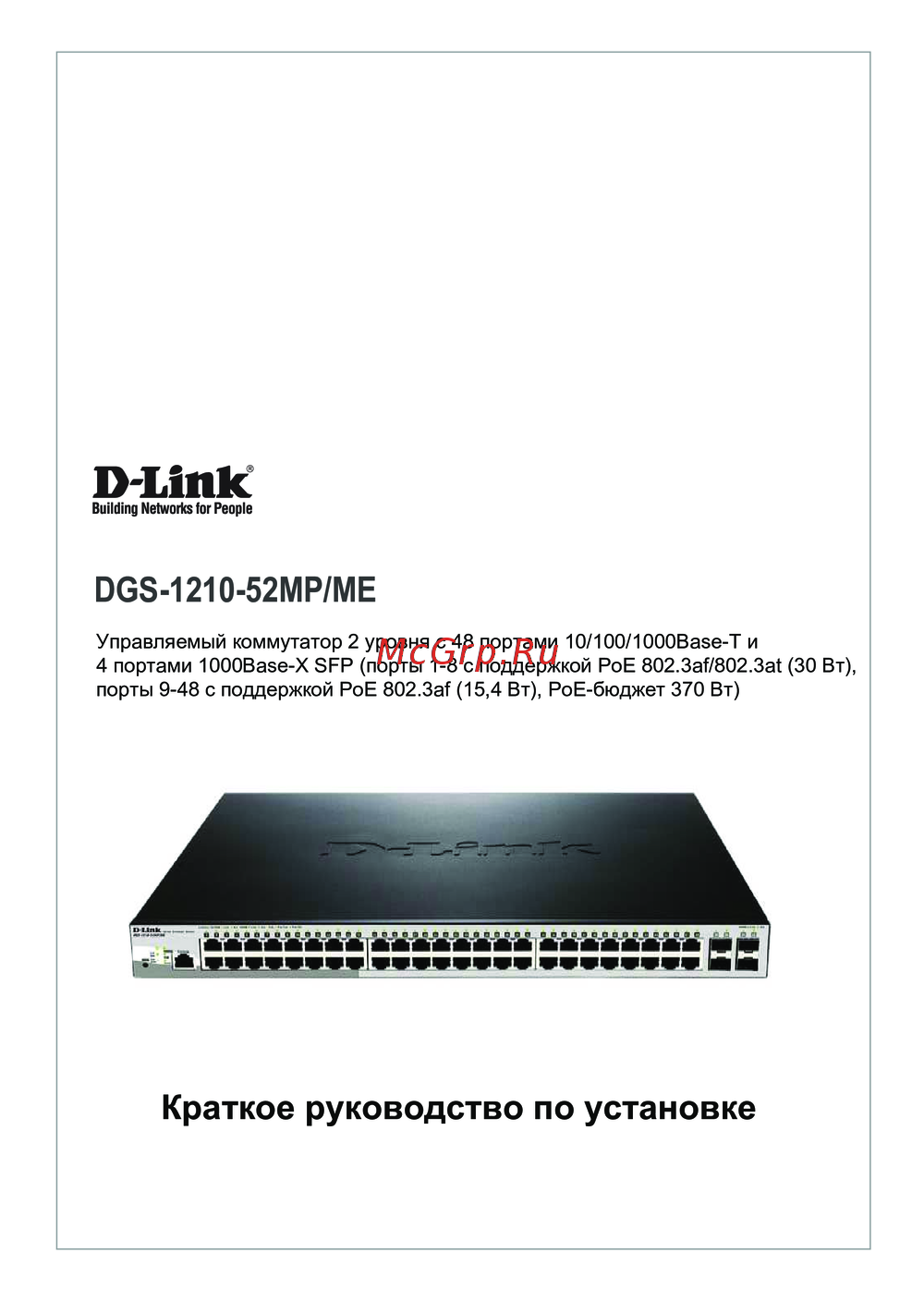 D-Link DGS-1210-52MP/MEКраткая инструкция по использованию
 -
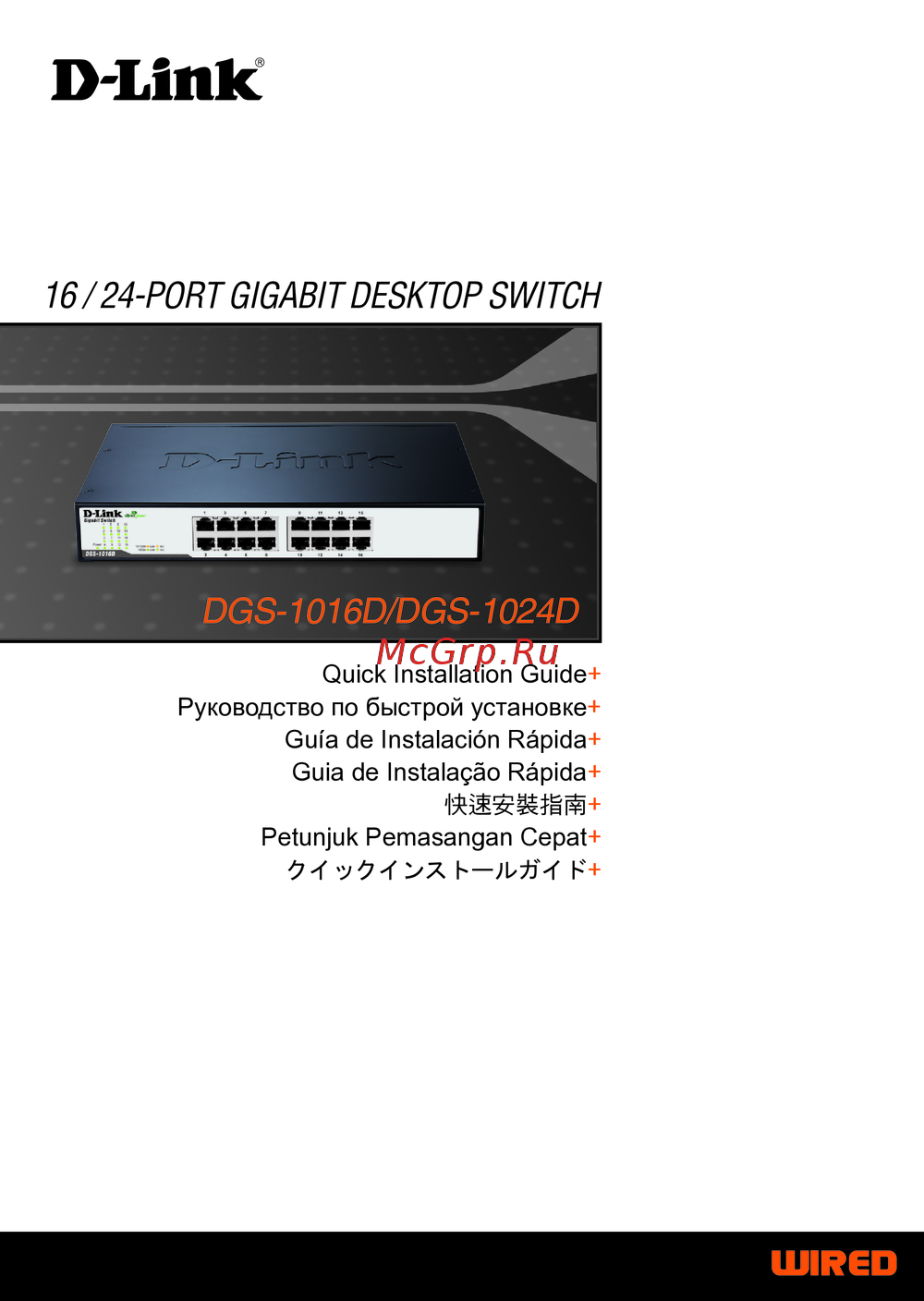 D-Link DGS-1024DИнструкция в сокращённом виде
 -
D-Link DGS-1016DРуководство по быстрому запуску
-
 D-Link DGS-1210-28L/MEКраткий обзор функций
 -
D-Link DGS-1510-28L/MEКраткая эксплуатационная инструкция
-
 D-Link DGS-1210-28/CКраткий обзор функций
 -
D-Link DGS-1210-28/FКраткая эксплуатационная инструкция
-
D-Link DGS-1210-28Краткая инструкция по использованию
-
 D-Link DGS-1210-52Сжатое руководство пользователя
 -
 D-Link DGS-1100-08PLV2Технический паспорт устройства
Изучите, как приоритетная маркировка и VLAN помогают управлять трафиком в сетях. Узнайте о значении приоритета для передачи критически важных данных.